
The Classical Northwest 2026
Events Program
Thank you to our sponsors and supporters


Randi and Jim Rosenfield
Anonymous
Elina and David Rabinowitz
Anna Dortman

Special Thank you to David Kerr Violin Shop for loaning our soloist’s cello

Special Thank you to Classic Pianos for providing space for our Piano Masterclass
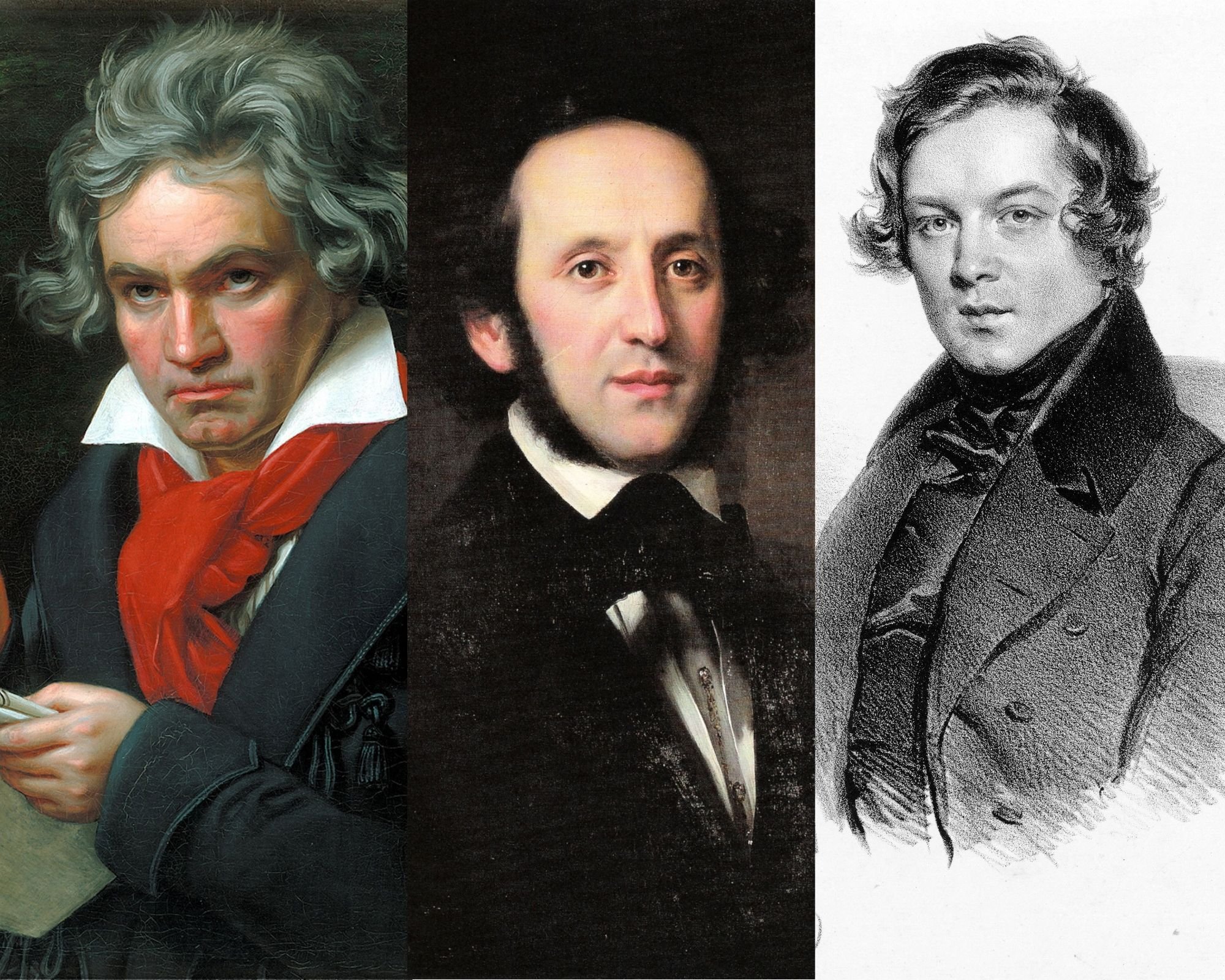
Purely Romantic
July 28th, 7:00PM | PSU Lincoln Recital Hall
Program
Aromi Danzmayr, violin
Yarden Cavenor, cello
Amir Avsker, piano
Schumann - Fantasiestücke, Op. 73
Beethoven - Cello Sonata No. 3 in A Major
INTERMISSION
Mendelssohn - Piano Trio No. 1 in D minor
Schumann - Fantasiestücke, Op. 73
Originally written for clarinet and piano, Fantasiestücke, Op. 73 is possible to be played with violin or cello. The piece was written in 1849 and consists of three movements. Translated from German, the piece is entitled “Fantasy pieces”; it comes from the Romantic-era philosophy of imagination being the source of creative expression—and the artist not being restricted. Tonight, the piece is adapted with cello.
Beethoven - Cello Sonata No. 3 in A Major
Beethoven’s Cello Sonata No. 3 is in A Major and consists of three movements: Allegro, ma non tanto; Scherzo - Allegro molto; and Adagio cantabile - Allegro vivace. The piece was published by Breitkopf und Härtel in Leipzig, Germany, in 1809, and dedicated to Ignaz Freiherr von Gleichenstein. Beethoven structures parts of the piece using the sonata form, employing three sections: exposition, development, and recapitulation. It was composed during the year of 1807-’08, and was his third of five sonatas for cello and piano. A later work for Beethoven, composers such as Mendelssohn, Brahms, Debussy, and Shostakovich would later model their sonatas after his.
Movement I is in A Major—the global tonic—and in cut time. Movement II shifts the tonality to A Minor before returning to the parallel major. Featuring a scherzo, or musical joke, Movement II is in 3/4, a triple meter. Here Beethoven uses the scherzo, instead of the Baroque- and Classical-era minuet, to vary the composition; it has a recurring, contrasting scherzo-trio pattern. Movement III is in 2/4 and E Major—the key a fifth away from the global tonic.
Mendelssohn - Piano Trio No. 1 in D minor
Felix Mendelssohn’s first piano trio was composed in 1839, and completed on October 23 of that year. In typical trio fashion, the instrumentation features a pianist, violinist, and cellist. In the composition, the piano plays an important role, following revisions made in Mendelssohn’s compositional process that expanded its contribution to the trio.
There are four movements: Molto allegro agitato, Andante con moto tranquillo, Scherzo - Leggiero e vivace, and Finale - Allegro assai appassionato. It was originally performed by Ferdinand David, violin, Franz Karl Witmann, cello, and Mendelssohn, piano. It debuted at the Leipzig Gewandhaus on February 1, 1840; the piece was garnered with high praise by Robert Schumann, one of his German contemporaries.
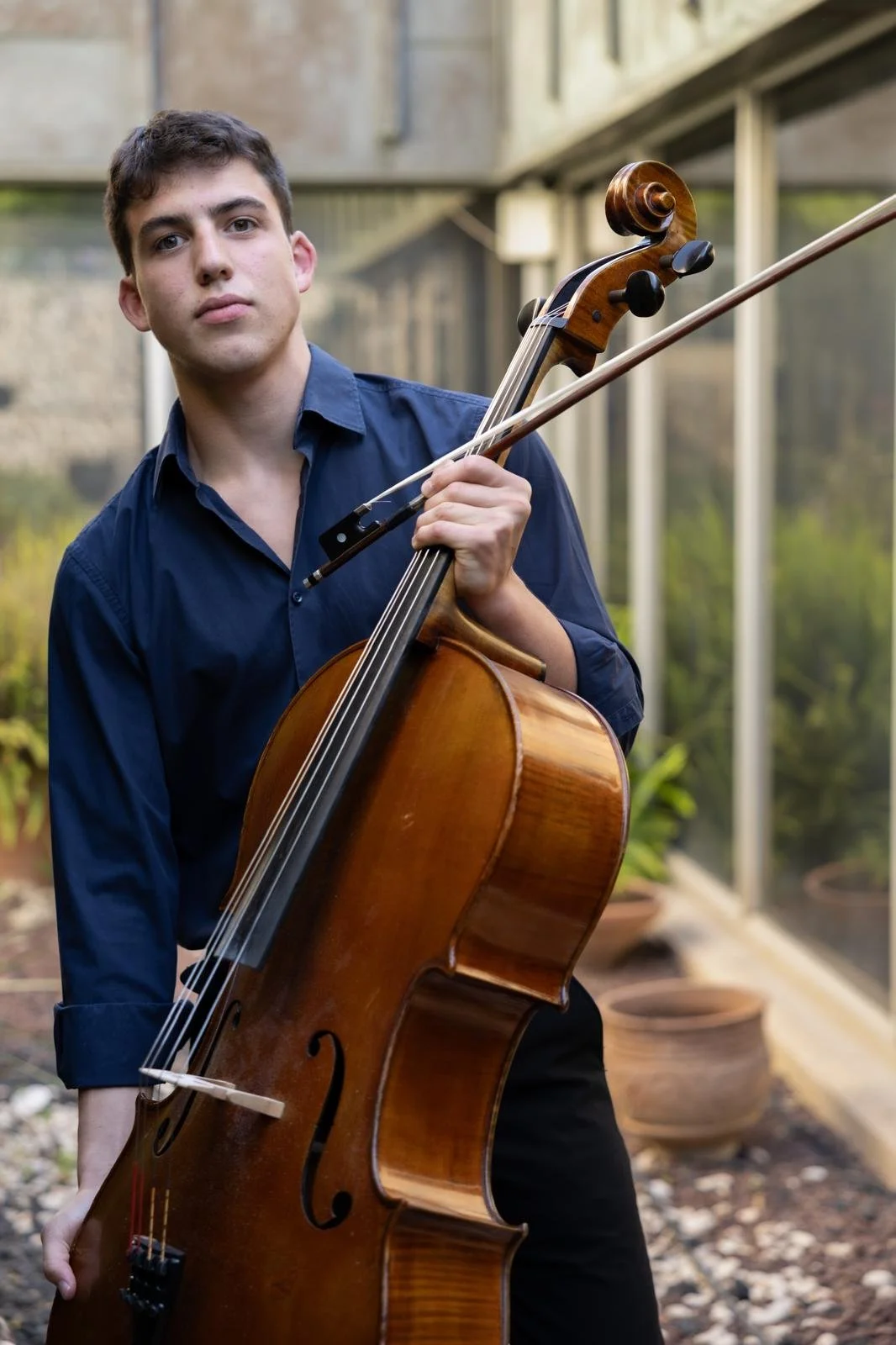
Yarden Cavenor
Seventeen-year-old Yarden Cavenor is one of Israel’s most talented young cellists. Coming from a musical family, he began playing piano in first grade and cello the following year at the Ra’anana Music Center (RMC). He currently studies cello under Prof. Zvi Pleser and Maestro Haran Meltzer, and piano with Ina Rubin.
A recipient of back-to-back America-Israel Cultural Foundation full scholarships (2023–2025), Yarden has won first prize at the Eilat International Competition and the RMC’s Aviv Competitions. He plays with the Israel Youth Philharmonic and the Ra’anana Youth Symphony Orchestra, and previously served as principal cellist of the Jerusalem Music Center’s (JMC) Young Talented String Orchestra.
Yarden’s festival and soloist appearances include the Perlman Music Program in New York, Chieti Classica in Italy, and a soloist feature with the Pacific Rose Ensemble in Portland, Oregon.
Beyond his classical studies, Yarden performs Israeli and Jewish music with his family, teaches and competes in chess, enjoys sports, and serves as a counselor in his local youth movement chapter.
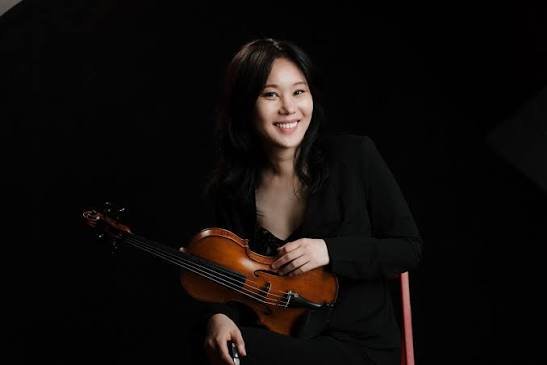
Aromi Danzmayr
Violinist Aromi Danzmayr is an accomplished orchestral and chamber musician. Since 2025, she has served as Concertmaster of the Vancouver Symphony (USA). Aromi is also a Concertmaster of the Portland Chamber Orchestra and Assistant Principal Second Violin of Portland Opera which she won in 2026.
Ms. Park frequently performs as a guest with orchestras throughout the United States, including the Atlanta Symphony Orchestra, Nashville Symphony, ProMusica Chamber Orchestra, Iris Orchestra, Memphis Symphony Orchestra, Sarasota Orchestra and Sarasota Opera, San Francisco Ballet Orchestra, and in Korea with the KBS Symphony Orchestra. She is also a regular guest artist at leading summer festivals, including the Colorado Music Festival and the Grant Park Music Festival.
An active chamber musician, Ms. Danzmayr enjoys collaborating with fellow artists in a wide range of chamber music performances.
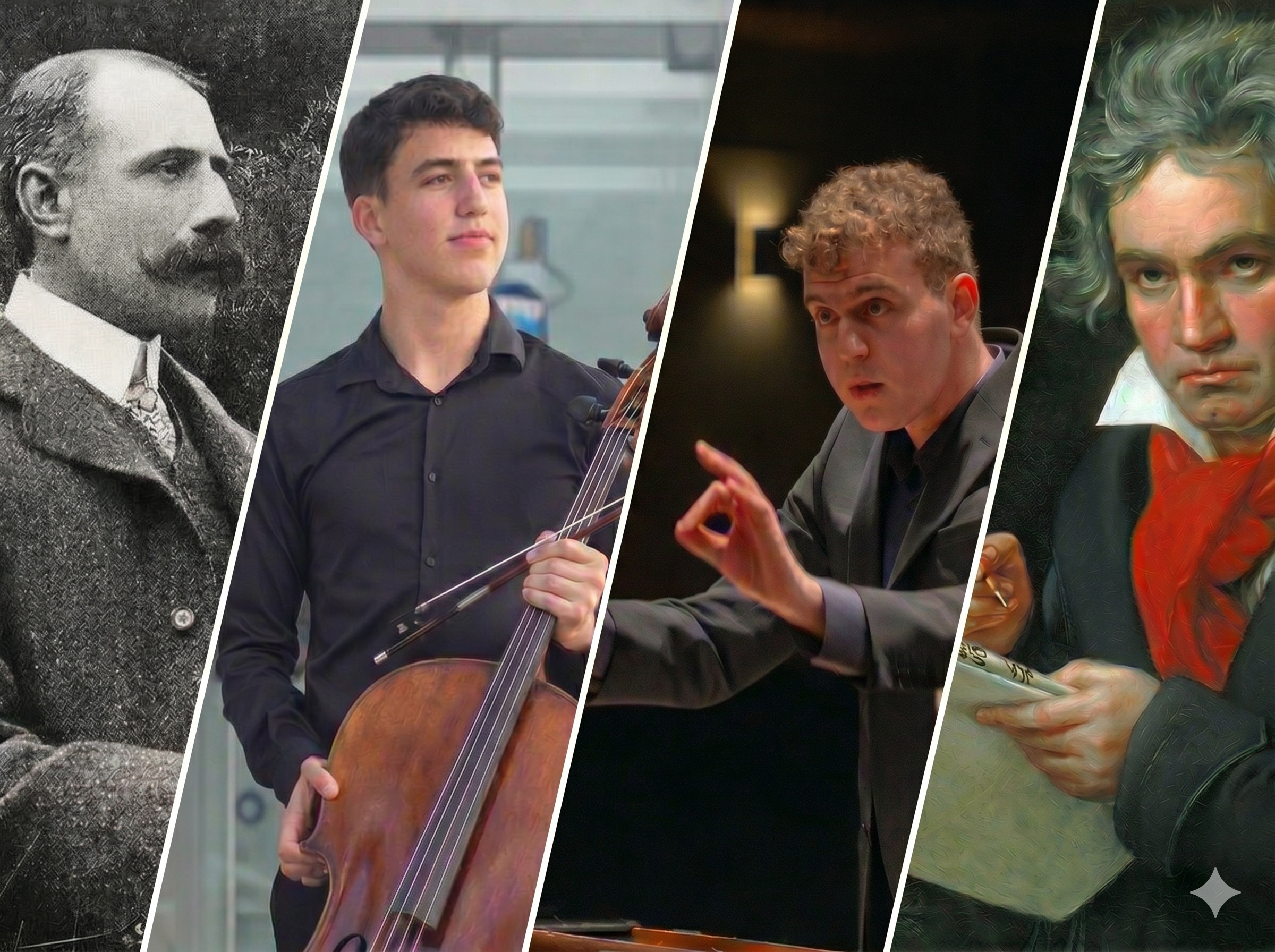
From Tragedy to Legacy
August 2nd, 7:00PM | Patricia Reser Center of the Arts
Program
Amir Avsker, conductor
Yarden Cavenor, cello
Verdi - Prelude to Act I of La Traviata
Elgar - Cello Concerto in E minor
Yarden Cavenor
INTERMISSION
Beethoven - Symphony No. 5
Giuseppe Verdi: Prelude to Act I of La Traviata
Giuseppe Verdi’s La Traviata (libretto by Francesco Maria Piave) is an opera in three acts. The opera’s text has an interesting history: once a book by Alexander Dumas, La dame aux camélias (The Lady of the Camellias, 1848), then adapted into a play of the same name (1852) by Dumas, and finally used for a libretto by Piave for Verdi’s opera “La Traviata” (The Fallen Woman/The Woman Who Strayed). The opera was first performed on March 6, 1853, at the Teatro La Fenice in Venice, Italy.
The piece is scored for violin (I and II), viola, cello, and double bass; two flutes, oboes, clarinets, and bassoons; tuba, two trumpets, three trombones, four horns; and harp, tambourine, triangle, castanets, bass drum, and timpani. In the prelude, the strings sound far-off, creating a delicate and intimate ambience. The winds accompany the first-violin-melody. The light instrumentation provides foreshadowing for the health of the main character, Violetta; it is appropriate for what is developed in Act 1.
Elgar - Cello Concerto in E minor
Edward Elgar’s concerto for cello and orchestra was composed following World War I. It premiered on October 27, 1919 with the London Symphony Orchestra, conducted by Elgar. The original instrumentation includes solo cello; two flutes, oboes, clarinets in A, trumpets in C, and bassoons; three trombones; four horns in F; and tuba, timpani, and strings.
When the orchestra and soloist play simultaneously, both are balanced; the soloist’s legato melody is featured well. Increases in dynamics appear across the orchestra for a blended ensemble sound, and when the cello is very lyrical and soft, the sections respond in kind. Three plucked notes in the cello conclude the piece well.
Beethoven - Symphony No. 5
Ludwig van Beethoven’s fifth symphony is best known for the opening motif that represents fate knocking on the door: three short notes followed by one long note. Beethoven finished the Symphony No. 5 in C Minor in 1808; it was first performed at Vienna’s Theater an der Wien on December 22, 1808. It was scored for piccolo, contrabassoon, and two flutes, oboes, clarinets, and bassoons; two horns (in E-flat and C), two trumpets (in C), and three trombones—alto, tenor, and bass; strings; and timpani. Movement I, Allegro con brio, is in C Minor; II, Andante con moto, A-flat Major; III, Scherzo: Allegro, C Minor; and IV, Allegro - Presto, C Major.
Allegro con brio begins with the aforementioned fate motif; played by the clarinets, violins, violas, cellos, and basses, it spreads two octaves. Andante con moto begins at a brisk pace, with a tempo of eighth note = 92 beats per minute. Scherzo - Allegro is in 3/4. The cellos and basses arpeggiate a C Minor chord—the global tonic/key of the piece—which introduces the movement’s theme. Allegro - Presto, the finale, is in C Major with the opening theme played at a fortissimo. The trombones, contrabassoon, and piccolo add to the texture, expanding its range and the orchestra’s volume. At twenty-nine measures, the ending is a recurrence of strong C Major chords, written as an appropriate ending for the symphony.
Yarden Cavenor
Seventeen-year-old Yarden Cavenor is one of Israel’s most talented young cellists. Coming from a musical family, he began playing piano in first grade and cello the following year at the Ra’anana Music Center (RMC). He currently studies cello under Prof. Zvi Pleser and Maestro Haran Meltzer, and piano with Ina Rubin.
A recipient of back-to-back America-Israel Cultural Foundation full scholarships (2023–2025), Yarden has won first prize at the Eilat International Competition and the RMC’s Aviv Competitions. He plays with the Israel Youth Philharmonic and the Ra’anana Youth Symphony Orchestra, and previously served as principal cellist of the Jerusalem Music Center’s (JMC) Young Talented String Orchestra.
Yarden’s festival and soloist appearances include the Perlman Music Program in New York, Chieti Classica in Italy, and a soloist feature with the Pacific Rose Ensemble in Portland, Oregon.
Beyond his classical studies, Yarden performs Israeli and Jewish music with his family, teaches and competes in chess, enjoys sports, and serves as a counselor in his local youth movement chapter.
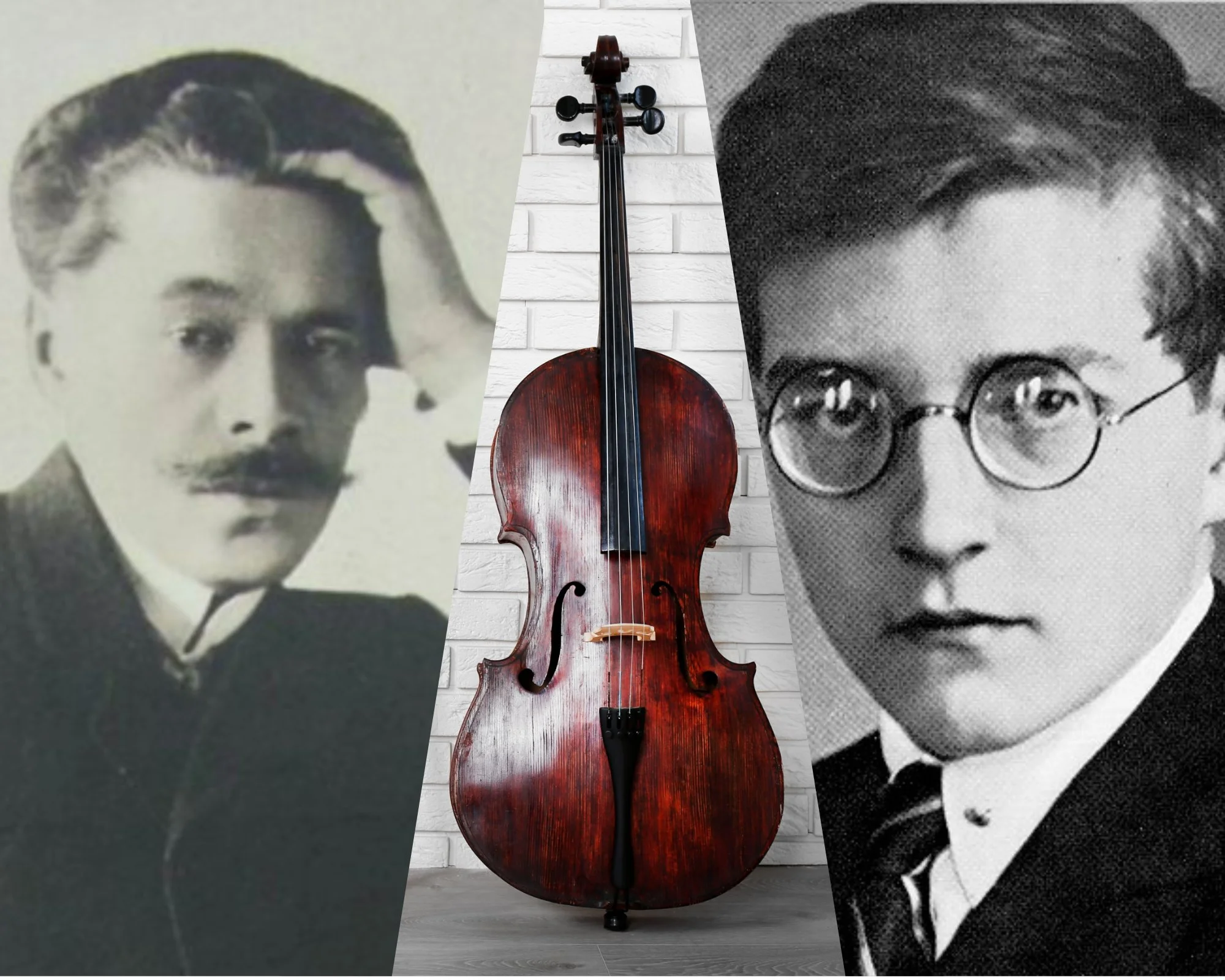
For a Cellist
August 4th, 3:00PM | Lincoln Recital Hall, PSU
Program
Charles Dalrymple, violin
Gavin Conant, cello
Alex Amick, piano
Shostakovich - Cello Sonata in D minor, Op. 40
Arensky - Piano Trio No. 1 in D minor, Op. 32
Dmitri Shostakovich: Cello Sonata in D minor, Op. 40
Dmitri Shostakovich’s life in 1934 was rife with turmoil when he composed his Cello Sonata in D Minor, Op. 40. However, it was completed in under a month’s time and was first performed by Shostakovich’s friend Viktor Kubatsky, on December 25 of that year. Together, the four movements: Allegro non troppo, Allegro, Largo, and Allegro combine to a duration of under thirty minutes.
Throughout the piece, D Minor is the bass, and chords often venture away from the home key. It is filled with much excitement and beauty, from long lines and high notes to staccato notes and rapid movement. Chords in the piano frequently provide a feeling of instability; the cello offers melodic material that both feels new and familiar. The piece’s distinct tempo markings—allegro non troppo, allegro, and largo—mark new sections and new ideas to be explored.
Anton Arensky: Piano Trio No. 1 in D minor, Op. 32
Anton Arensky, a Russian composer who composed largely in the nineteenth century, completed his Piano Trio No. 1 in D Minor, Op. 32, in 1894. He dedicated the Romantic chamber piece for the Russian cellist Karl Davydov. In piano trio fashion, the composition is scored for piano, violin, and cello. One of the earliest recordings was done on wax cylinders, with soloists Jan Hřímalý, violin, Anatoliy Brandukov, cello, and Arensky, piano.
Like many long-form compositions, Movement I is in sonata form. In Movement I, the cello is largely written in the tenor clef, allowing for lines of higher pitch that produce clear and light melodies. The meter of common time provides metric stability, as beats one and three are emphasized, allowing for march-like figures and a moderate tempo.
Movement II is in D Major and consists of the ternary form: ABA. In this movement, thirty-second notes in the piano create an exciting beginning; notes demonstrate the range of the piano. The violin and cello trade the melody between the two, following sustained notes. At meno mosso, the cello is expressive with the melody, before there is a duet of sorts with the violin and chords in the piano.
Movement III, in G Minor, is solemn and tender. A slow elegy, its structure is also in the ternary form. At ‘Più mosso,’ it modulates to G Major, which brightens the overall sound. The violin, following the opening cello melody, feels light and airy.
Movement IV, a rondo, returns the piece to the global tonic of D Minor. Marked ‘allegro non troppo,’ the piano introduces the movement; the piece is in three, which highlights fast passages well. Different tonalities are sampled, before ‘senza sordino’—without a mute—allows the strings to play full and rich, while beginning a new section. Allegro molto keeps the piece in 3/4 before the final cadence lands conclusively in D Minor.
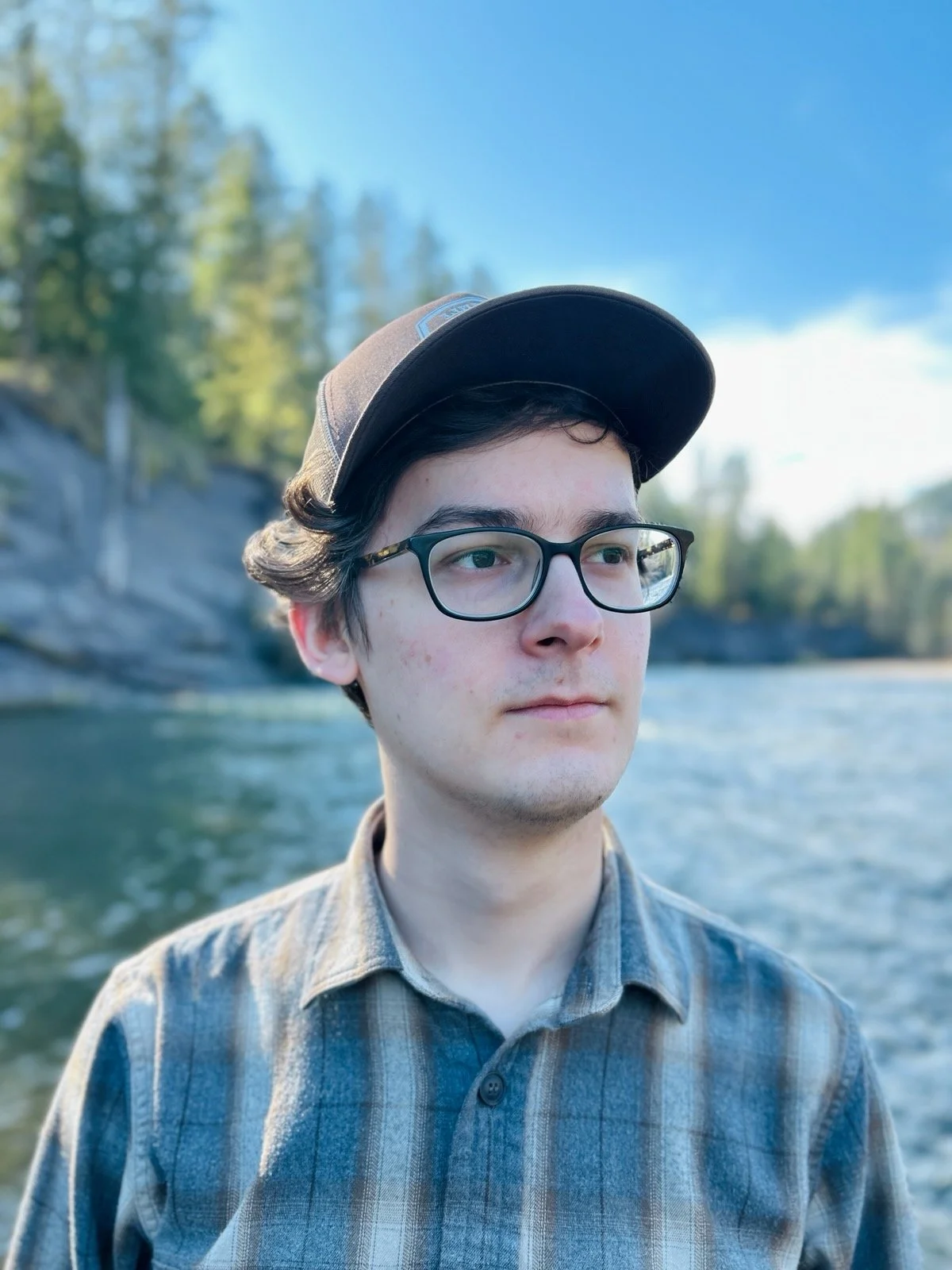
Charles Dalrymple
A graduate of Portland State University, Charles Dalrymple earned his Bachelor of Music in Violin Performance in the Spring of 2026. Having commenced his violin studies at seven years old, he has since refined his craft in violin, viola, chamber music, and pedagogy under the distinguished mentorship of Dr. Tomás Cotik, Hamilton Cheifetz, Dr. Lisa Zweben, and Adam LaMotte. Currently, Charles serves as a tenured member of the Vancouver Symphony Orchestra. In addition to his performance career, he maintains a private teaching studio and provides instruction for both violin and viola through the Morningside Music Academy in Beaverton.
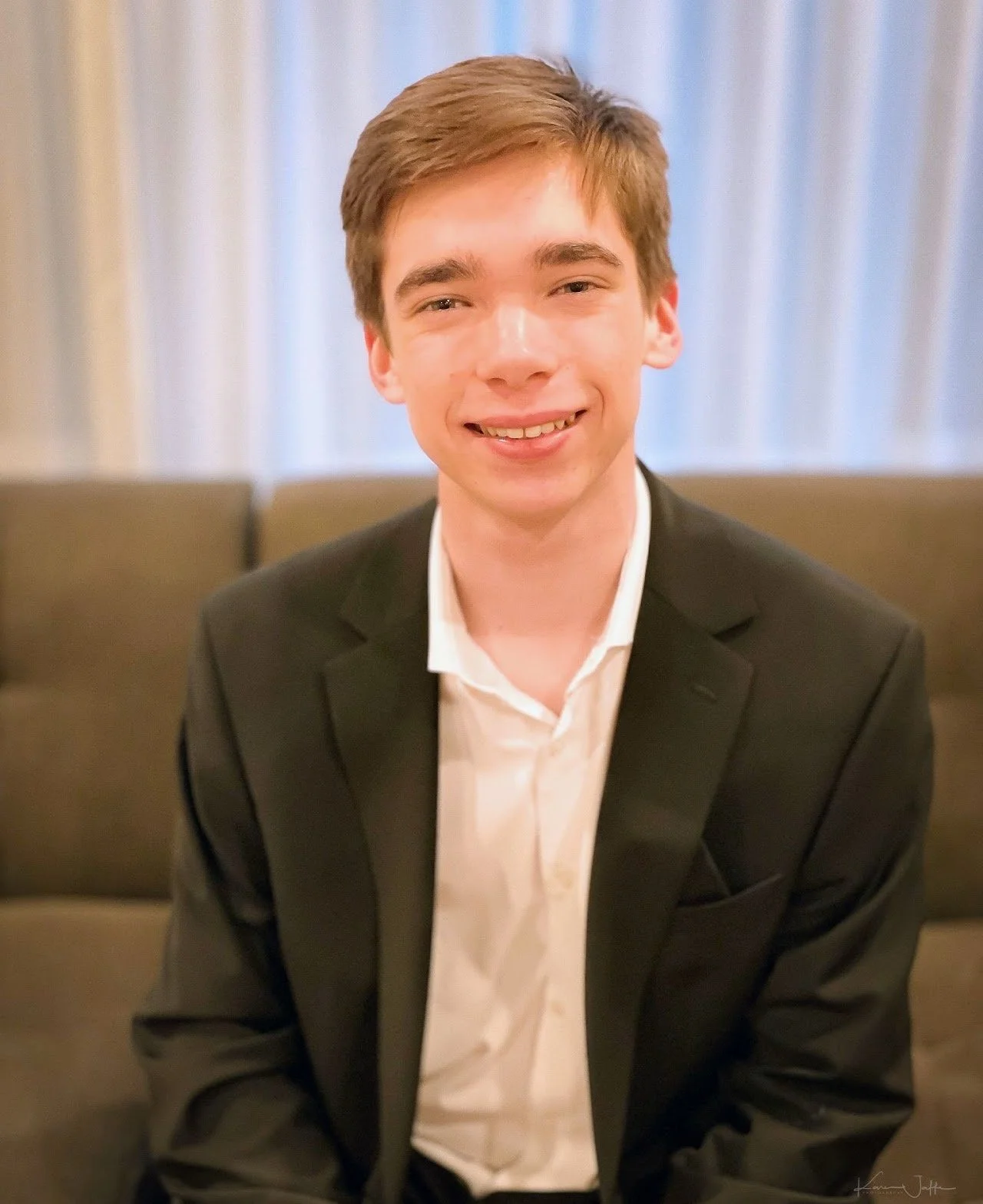
Gavin Conant
A cellist for seven years, Gavin Conant is an incoming sophomore at Portland State University, where he is currently pursuing a Bachelor’s Degree in Music Performance under the tutelage of Hamilton Cheifetz. From 2023 to 2025, he was a member of the Metropolitan Youth Symphony and its premier string ensemble, MYSfits. During this period, he also engaged in regular chamber music performances with the Pacific Rose Ensemble. Gavin has further collaborated with fellow Portland State cellists in Hamilton Cheifetz’s Inside Chamber Music series, presented in coordination with the Friends of Chamber Music.
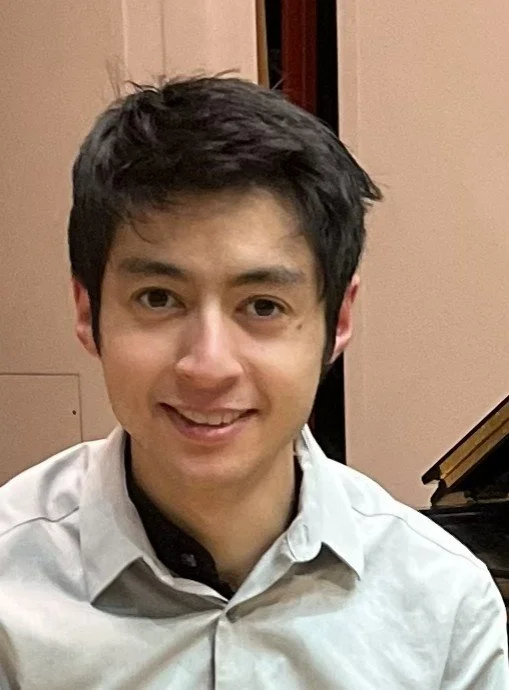
Alex Amick
Currently pursuing a Master of Music in Solo Piano Performance at the University of Oregon, Alex Amick previously earned his dual Bachelor of Arts degrees in Music and Spanish from Western Washington University.
A prolific collaborative pianist, Alex has appeared with a variety of vocal and instrumental groups, including prestigious organizations such as the Oregon Bach Festival, Cascadia Chamber Opera, Bellingham Festival of Music, and Music On Site.
Beyond the concert stage, Alex serves as the Music Director for St. Catherine's Catholic Church in Veneta, Oregon. In this capacity, he curates music for both English and Latin liturgies, leads the choral ensemble, and performs on piano and organ. Additionally, he is the accompanist for the Eugene Concert Choir directed by Dr. Diane Retallack and holds a graduate assistantship at the University of Oregon.
Alex continues his keyboard development through intensive studies with Dr. Alexandre Dossin, Dr. David Riley, and Dr. Gustavo Castro-Ramírez.
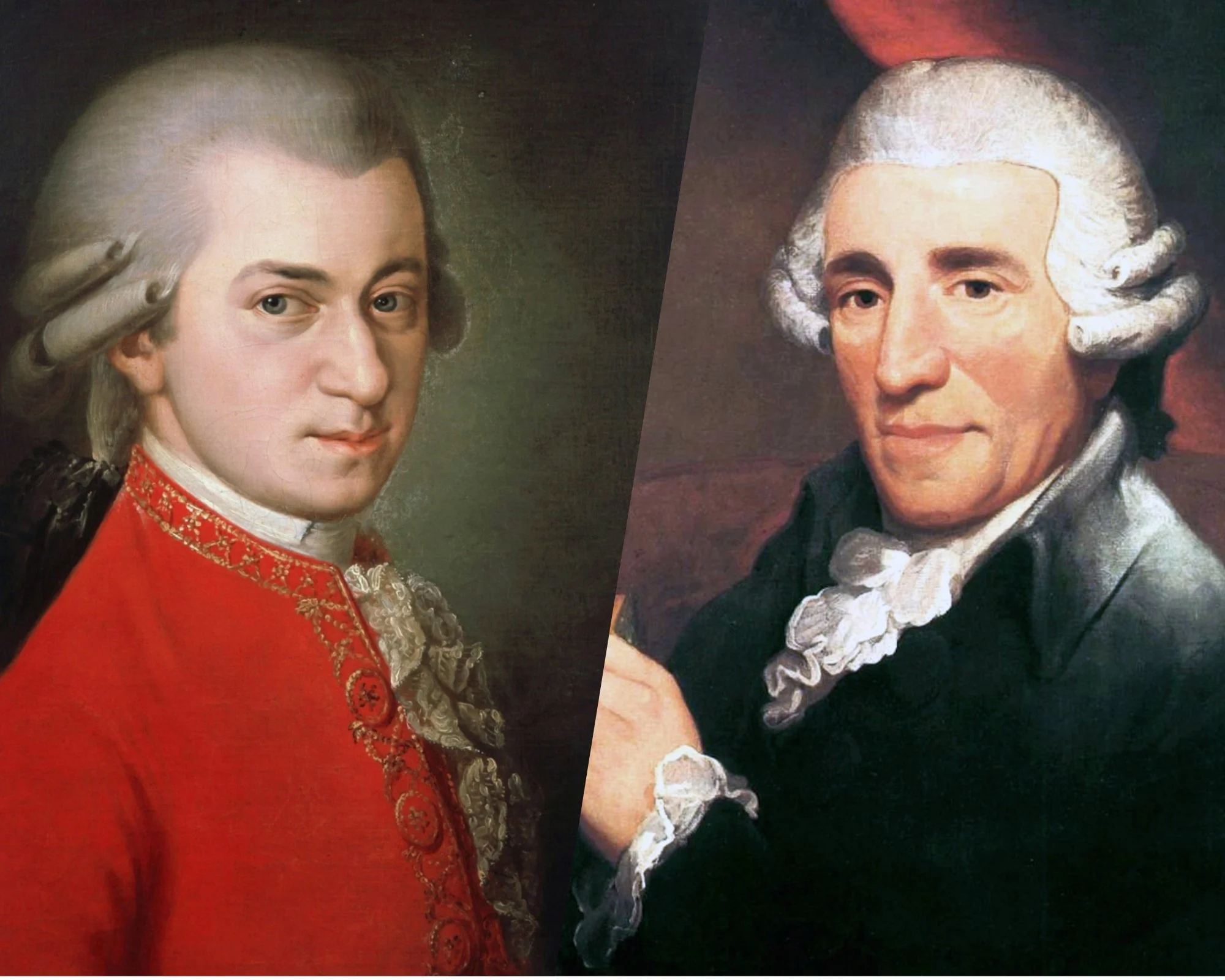
Farewell
August 8th, 2:00PM | Lincoln Recital Hall, PSU
Program
Amir Avsker, conductor and piano
Brian Hsu, Piano
The Classical Northwest Chamber Orchestra
Mozart - Piano Concerto No. 7, K. 242
Brian Hsu
Amir Avsker
INTERMISSION
Haydn - Symphony No. 45 “Farewell”
Mozart: Piano Concerto No. 7, K. 242
Wolfgang Amadeus Mozart’s Piano Concerto No. 7 was commissioned by Countess Maria Antonia Lodron, a noblewoman from Salzburg, Austria. Maria herself possessed an important venue for music performance in Salzburg. The original instrumentation of the concerto featured three fortepianos accompanied by two oboes, two horns, and strings, a sizable chamber work in its own right. With three keyboards, Mozart was able to achieve a polyphony of sorts, as independent melodic lines were played by soloists. Composed in 1776, it followed the piano concerto form. Tonight’s performance is that of Mozart’s two-piano arrangement.
Movement I, Allegro, is in F Major. After an intro from the oboes, horns, and strings, the piano duet starts to take shape, with trills, sixteenth-note figures, and chords typical of Mozart’s writing. Near the end, a cadenza involving the two pianos, and language like that of a call-and-response, the orchestra pauses before concluding the movement on its own.
In Movement II, Adagio, the orchestra and pianos alternate; soft dynamics are explored amid continuous lines. Following the cadenza, the orchestra plays a phrase before Piano I’s spritely five-note tuplet and two final piano chords that end the movement.
Movement III is a rondo, in the style of a minuet. The pianos begin in a fast three feel, and triplets set the pace before the orchestra enters. Piano I takes an important part in the movement, with several fast passages and runs played. The duet returns, with more ensemble involvement, and a redefinition of the minuet as a structure. The concerto ends with the final two chords landing on beats 1 and 2 of measure 212, and a rest on 3 for the most conclusive ending.
Haydn: Symphony No. 45 “Farewell”
In four movements, Joseph Haydn’s Symphony No. 45 in F-sharp Minor is colloquially known as the “Farewell” Symphony. Composed in 1772, it was scored for two oboes and horns, bassoon, and strings; there are two sections of violins throughout the piece, and four in “Adagio,” with violas, cellos, and double basses arranged in the traditional orchestral format.
Movement I, marked Allegro assai, is in 3/4. Movement II, Adagio, is in 3/8 and A Major. Movement III, Menuet e Trio: Allegretto, is in F-sharp Major; in accordance with the minuet form, it is in 3/4. Movement IV, Finale: Presto - Adagio, features much development by beginning in cut time and the global tonic—F-sharp Minor—and in 3/4, then A Major, and a later transition back to F-sharp Major.
During the period of time in which Haydn wrote the symphony, he was employed by the prince of the Austro-Hungarian Empire: Nikolaus I, Prince Esterházy. Haydn and his court musicians had been in Hungary at the prince’s summer palace for a longer-than-expected stay; in order to allow them to return home to Eisenstadt, Germany, Haydn wrote a clever farewell for them and inserted it in Movement IV, Finale. At the end of the performance, he and his concertmaster, Luigi Tomasini, were the only two musicians playing (both the violin).
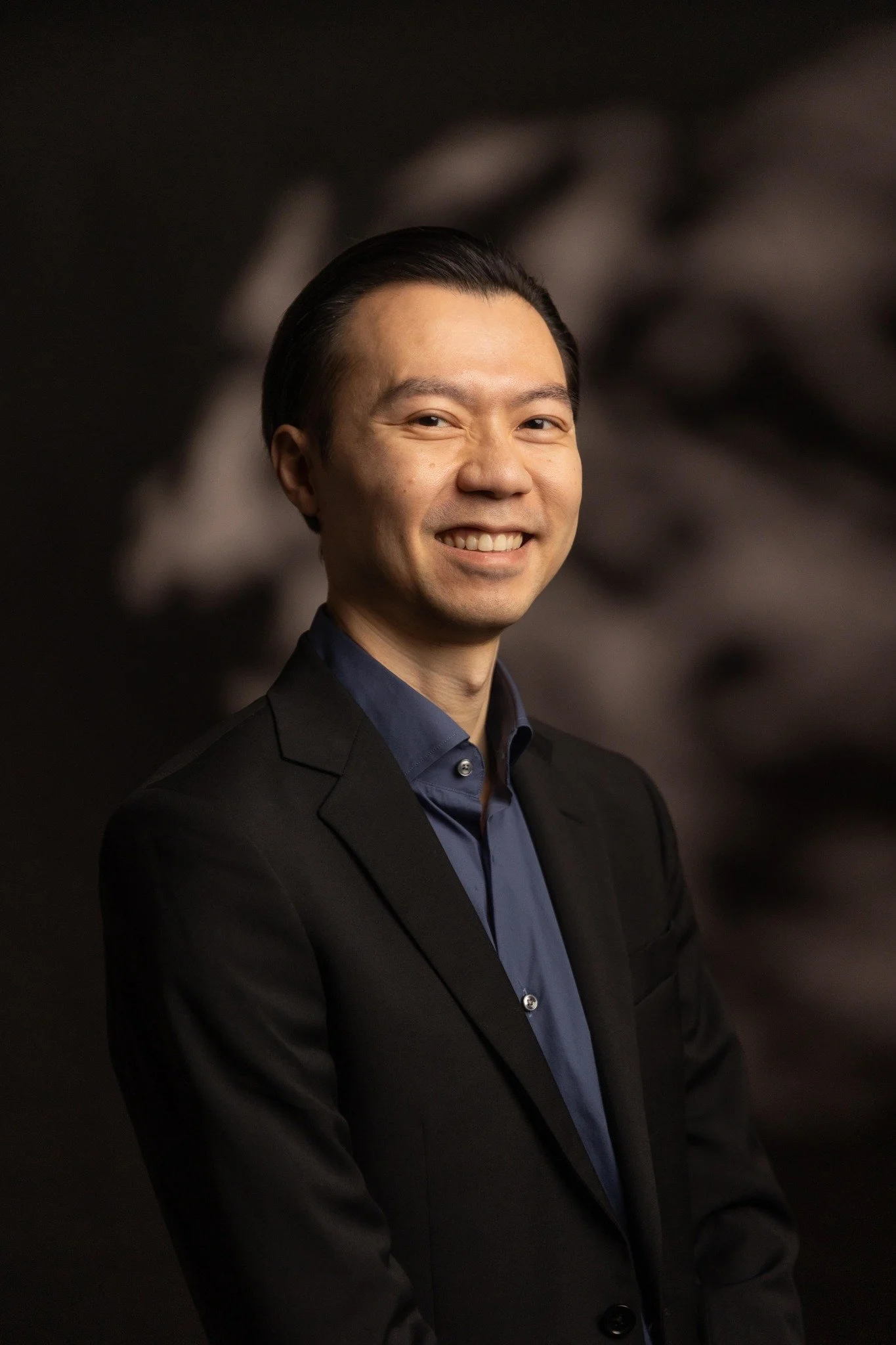
Dr. Brian Hsu
Since his concerto debut at the age of 16 with the Philadelphia Orchestra, Taiwanese-American pianist Brian Hsu has gone on to establish himself a pianist of great energy and unusual communicative ability. Critics have described his performances in surperlatives, noting his “breadth of expression and technical ability.”
An experienced performer, Mr. Hsu has performed throughout North America, Europe, Asia, and South Africa. US performances include Boston, New York, Chicago, New Orleans, Dallas, as well as many others. He has appeared as concerto soloist with such ensembles as the Philadelphia Orchestra, Taiwan National Symphony, Juilliard Orchestra, Haddonfield Symphony, Sendai Philharmonic, and University of Michigan Symphony Orchestra. He has also been a guest on WQXR radio station in New York several times. Mr. Hsu has performed in various music festivals including Amalfi Coast Music Festival in Italy; Blue Lake Fine Arts Camp in Michigan; Gijon International Piano Festival in Spain; Eastern Music Festival in North Carolina; Banff Festival of the Arts in Canada; PianoFest in The Hamptons in Long Island, New York. His US debut solo recording, Night at the opera: Part I, which consist of opera transcriptions for solo piano, was released in the fall of 2018. In addition to his competition successes, Mr. Hsu was the recipient of numerous awards while attending Juilliard, Yale, and Michigan.
Mr. Hsu frequently appears as a guest artist/teacher, presenter, and jury member in various Music Teachers National Association contests and other major competitions, such as the New Orleans International Piano Competition, Nanyang Academy of the Arts in Singapore. He often performs and has taught masterclasses at various colleges and universities throughout the United States and Asia. An avid chamber musician and collaborator, Mr. Hsu continuously performs with colleagues throughout the music world. Mr. Hsu participated in the world premiere of Paul Schoenfeld’s Piano Quintet with members of the Pro Arte’s Quartet, and in the spring of 2014, a recording was released by Albany Records. Along with voice alumni of Loyola University New Orleans, Mr. Hsu participated in the debut of Logan Skeleton’s Letters to Santa in 2016. As a member of the piano trio, Ensemble Peri, he participated in its inaugural tour which took place in Korea during the summer of 2019. Mr. Hsu is also a founding member of Key 2 Inclusion, an intercollegiate initiative to promote and teach piano music written by African-American and other minority composers.
Mr. Hsu served as a staff accompanist at Yale University and University of Michigan, staff accompanist and chamber music coach at Eastern Music Festival, piano faculty at the McAlester Institute in Oklahoma, piano faculty at Blue Lake Fine Arts Camp in Michigan. He has served as schedule coordinator, staff pianist, faculty, and assistant to the director at Amalfi Coast Music Festival in Italy. He was also an adjunct professor at Siena Heights University and taught at the Ann Arbor School for the Performing Arts.
Mr. Hsu’s primary piano professors include Logan Skelton, Peter Frankl, Jerome Lowenthal, Yoheved Kaplinsky, Wha-Kyung Byun, and John Kuo. He has won awards in numerous competitions, both in the US and Asia, including Wideman Competition, Corpus Christi International Young Artists’ Competition, Juilliard’s Gina Bachauer, National Piano Competition in Taiwan. Additional studies have been with Da-Ming Zhu, Paul Schenly, Marc Durand, Arthur Greene. He received his Bachelor’s and Master’s degrees from The Juilliard School, Artist Diploma from Yale University, Doctoral of Musical Arts degree from the University of Michigan. He is currently associate professor of piano at the University of Oregon. Prior to Oregon, he was the associate professor at Loyola University New Orleans.
The Classical Northwest Masterclass series
August 3rd, 10:00AM | Concert School of Music, Wilsonville
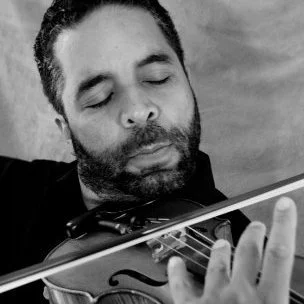
Violin masterclass with Darrell Hunt
The Instructor
Karen Schulz-Harmon is an avid chamber musician, orchestral player and teacher. She enjoys recording and collaborating with various instrumentalists as well as playing all types of music. Karen performs with the Portland Opera, Oregon Symphony, Orchestra Next, Eugene Symphony and Cellotropes, a cello quartet she co-founded. She coaches cello sectionals and chamber music in local schools, sectionals for the Metropolitan Youth Symphony as well as gives masterclasses in Portland and Seattle. In May of 2024 Karen was the guest soloist with the Beaverton Symphony Orchestra, performing Schumann’s Cello Concerto in A minor.
Over a period spanning several years Karen spent two months in Europe, which included observing the teaching of Robert Nagy, one of the principal cellists in the Vienna Philharmonic. During this time, she also had the opportunity to interact with the private teachers and chamber music coaches at the Südsteirische Musiktage Festival in Austria founded by Wolfgang Klos. While in Chicago, Karen performed with the Chicago Philharmonic, Chicago Bach Ensemble, Chicago Opera Theater and the Chicago Trio. Karen was a member of the faculty at the Chicago Academy for the Arts (CAA) for eight years. She also coached chamber music for over ten years for the Chicago Youth Symphony Orchestras Program.
In the summer of 2012 Karen was selected to attend the National Summer Cello Institute. While there she had the honor to work with cellists Richard Aaron, Timothy Eddy, Ralph Kirshbaum and Uri Vardi. She also participated in an enlightening Feldenkrais workshop with Hagit Vardi.
Karen attended Northern Illinois University at the invitation of cellist Marc Johnson and was privileged to work with all the members of the Vermeer String Quartet. She graduated in 2005 with a Masters of Music degree in Cello Performance. Karen performs with an 1840 Jacob Fendt cello.
August 4rd, 10:00AM | Concert School of Music, Wilsonville
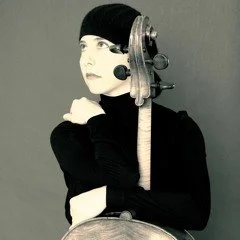
Cello masterclass with Karen Schulz-Harmon
The Instructor
Karen Schulz-Harmon is an avid chamber musician, orchestral player and teacher. She enjoys recording and collaborating with various instrumentalists as well as playing all types of music. Karen performs with the Portland Opera, Oregon Symphony, Orchestra Next, Eugene Symphony and Cellotropes, a cello quartet she co-founded. She coaches cello sectionals and chamber music in local schools, sectionals for the Metropolitan Youth Symphony as well as gives masterclasses in Portland and Seattle. In May of 2024 Karen was the guest soloist with the Beaverton Symphony Orchestra, performing Schumann’s Cello Concerto in A minor.
Over a period spanning several years Karen spent two months in Europe, which included observing the teaching of Robert Nagy, one of the principal cellists in the Vienna Philharmonic. During this time, she also had the opportunity to interact with the private teachers and chamber music coaches at the Südsteirische Musiktage Festival in Austria founded by Wolfgang Klos. While in Chicago, Karen performed with the Chicago Philharmonic, Chicago Bach Ensemble, Chicago Opera Theater and the Chicago Trio. Karen was a member of the faculty at the Chicago Academy for the Arts (CAA) for eight years. She also coached chamber music for over ten years for the Chicago Youth Symphony Orchestras Program.
In the summer of 2012 Karen was selected to attend the National Summer Cello Institute. While there she had the honor to work with cellists Richard Aaron, Timothy Eddy, Ralph Kirshbaum and Uri Vardi. She also participated in an enlightening Feldenkrais workshop with Hagit Vardi.
Karen attended Northern Illinois University at the invitation of cellist Marc Johnson and was privileged to work with all the members of the Vermeer String Quartet. She graduated in 2005 with a Masters of Music degree in Cello Performance. Karen performs with an 1840 Jacob Fendt cello.
August 6th, 10:00AM | Concert School of Music, Wilsonville
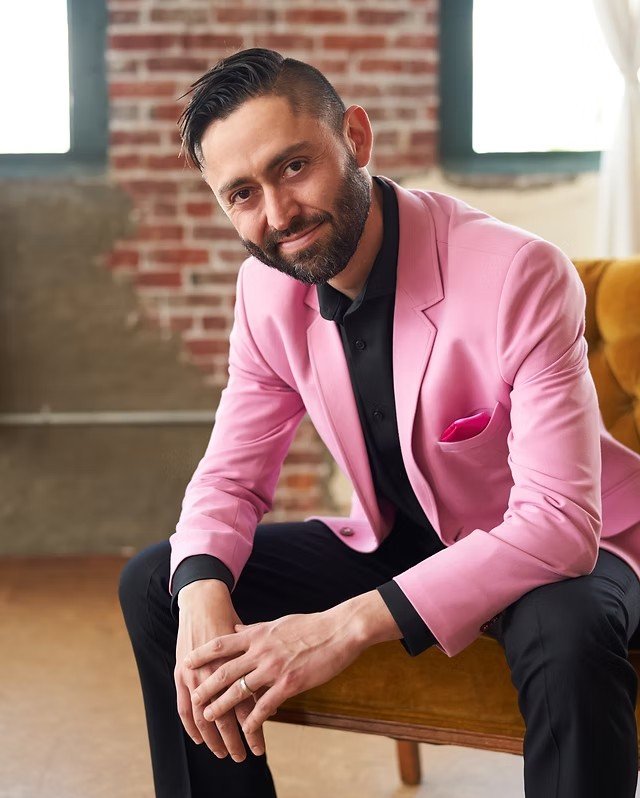
Viola masterclass with Dr. Raúl Gómez-Rojas
The Instructor
Member of the 2018 class of the prestigious Bruno Walter National Conductor Preview (League of American Orchestras), Raúl Gómez-Rojas inspires audiences and artists of all ages and backgrounds to use music as a vehicle to connect, pursue excellence, and spread joy. Lauded as a “visionary conductor” (Oregon ArtsWatch), Raúl has built a reputation as an insightful leader who “captivates both performing musicians and audiences alike,” and whose “positive attitude and enthusiasm make him a joy to be with.”
Raúl is a passionate music educator, and 2025-2026 marks his tenth season as Music Director of Metropolitan Youth Symphony in Portland, OR. He has led the organization to new artistic heights while creating “concert programs that any forward-looking orchestra should envy.” (Willamette Week). Raúl is a regular guest conductor with the Oregon Symphony and multiple other professional ensembles, and also currently serves as Music Director of YMA: Young Musicians and Artists.
August 7th, 10:00AM | Classic Pianos Portland
Piano masterclass with Dr. Brian Hsu
The Instructor
The Since his concerto debut at the age of 16 with the Philadelphia Orchestra, Taiwanese-American pianist Brian Hsu has gone on to establish himself a pianist of great energy and unusual communicative ability. Critics have described his performances in surperlatives, noting his “breadth of expression and technical ability.”
An experienced performer, Mr. Hsu has performed throughout North America, Europe, Asia, and South Africa. US performances include Boston, New York, Chicago, New Orleans, Dallas, as well as many others. He has appeared as concerto soloist with such ensembles as the Philadelphia Orchestra, Taiwan National Symphony, Juilliard Orchestra, Haddonfield Symphony, Sendai Philharmonic, and University of Michigan Symphony Orchestra. He has also been a guest on WQXR radio station in New York several times. Mr. Hsu has performed in various music festivals including Amalfi Coast Music Festival in Italy; Blue Lake Fine Arts Camp in Michigan; Gijon International Piano Festival in Spain; Eastern Music Festival in North Carolina; Banff Festival of the Arts in Canada; PianoFest in The Hamptons in Long Island, New York. His US debut solo recording, Night at the opera: Part I, which consist of opera transcriptions for solo piano, was released in the fall of 2018. In addition to his competition successes, Mr. Hsu was the recipient of numerous awards while attending Juilliard, Yale, and Michigan.
Mr. Hsu frequently appears as a guest artist/teacher, presenter, and jury member in various Music Teachers National Association contests and other major competitions, such as the New Orleans International Piano Competition, Nanyang Academy of the Arts in Singapore. He often performs and has taught masterclasses at various colleges and universities throughout the United States and Asia. An avid chamber musician and collaborator, Mr. Hsu continuously performs with colleagues throughout the music world. Mr. Hsu participated in the world premiere of Paul Schoenfeld’s Piano Quintet with members of the Pro Arte’s Quartet, and in the spring of 2014, a recording was released by Albany Records. Along with voice alumni of Loyola University New Orleans, Mr. Hsu participated in the debut of Logan Skeleton’s Letters to Santa in 2016. As a member of the piano trio, Ensemble Peri, he participated in its inaugural tour which took place in Korea during the summer of 2019. Mr. Hsu is also a founding member of Key 2 Inclusion, an intercollegiate initiative to promote and teach piano music written by African-American and other minority composers.
Mr. Hsu served as a staff accompanist at Yale University and University of Michigan, staff accompanist and chamber music coach at Eastern Music Festival, piano faculty at the McAlester Institute in Oklahoma, piano faculty at Blue Lake Fine Arts Camp in Michigan. He has served as schedule coordinator, staff pianist, faculty, and assistant to the director at Amalfi Coast Music Festival in Italy. He was also an adjunct professor at Siena Heights University and taught at the Ann Arbor School for the Performing Arts.
Mr. Hsu’s primary piano professors include Logan Skelton, Peter Frankl, Jerome Lowenthal, Yoheved Kaplinsky, Wha-Kyung Byun, and John Kuo. He has won awards in numerous competitions, both in the US and Asia, including Wideman Competition, Corpus Christi International Young Artists’ Competition, Juilliard’s Gina Bachauer, National Piano Competition in Taiwan. Additional studies have been with Da-Ming Zhu, Paul Schenly, Marc Durand, Arthur Greene. He received his Bachelor’s and Master’s degrees from The Juilliard School, Artist Diploma from Yale University, Doctoral of Musical Arts degree from the University of Michigan. He is currently associate professor of piano at the University of Oregon. Prior to Oregon, he was the associate professor at Loyola University New Orleans.